Popular Colour Trading Strategies for Beginners
Learn four popular strategies commonly used by players. This guide explains how each strategy works, when to use it, and provides simple examples to help beginners build their own approach.
*Strategy Note*
There is no guaranteed way to win. These strategies reflect common approaches used by players and are meant as references.
Feel free to mix, adjust, and create your own strategy based on how you play
Feel free to mix, adjust, and create your own strategy based on how you play
Trend Follow
Probability Balance
Watch recent results and follow short-term trends (colors or numbers).
This strategy is about choosing based on what’s been appearing more often lately.
This strategy is about choosing based on what’s been appearing more often lately.
Flat Betting
Same Bet Each Round
Use the same bet amount each round to keep things simple and controlled.
Good for beginners who want a steady rhythm without overthinking.
Good for beginners who want a steady rhythm without overthinking.
Double-Up
Increase After a Loss
If you lose a round, increase your next bet by a set multiple (often 2x) to try to recover.
This strategy needs strict limits and a clear stop point to avoid chasing too far.
This strategy needs strict limits and a clear stop point to avoid chasing too far.
Set Limits
Plan Before You Play
Plan your session before you play: set a budget, a win target, and a stop-loss.
You also choose when to enter a round instead of betting every single time.
You also choose when to enter a round instead of betting every single time.
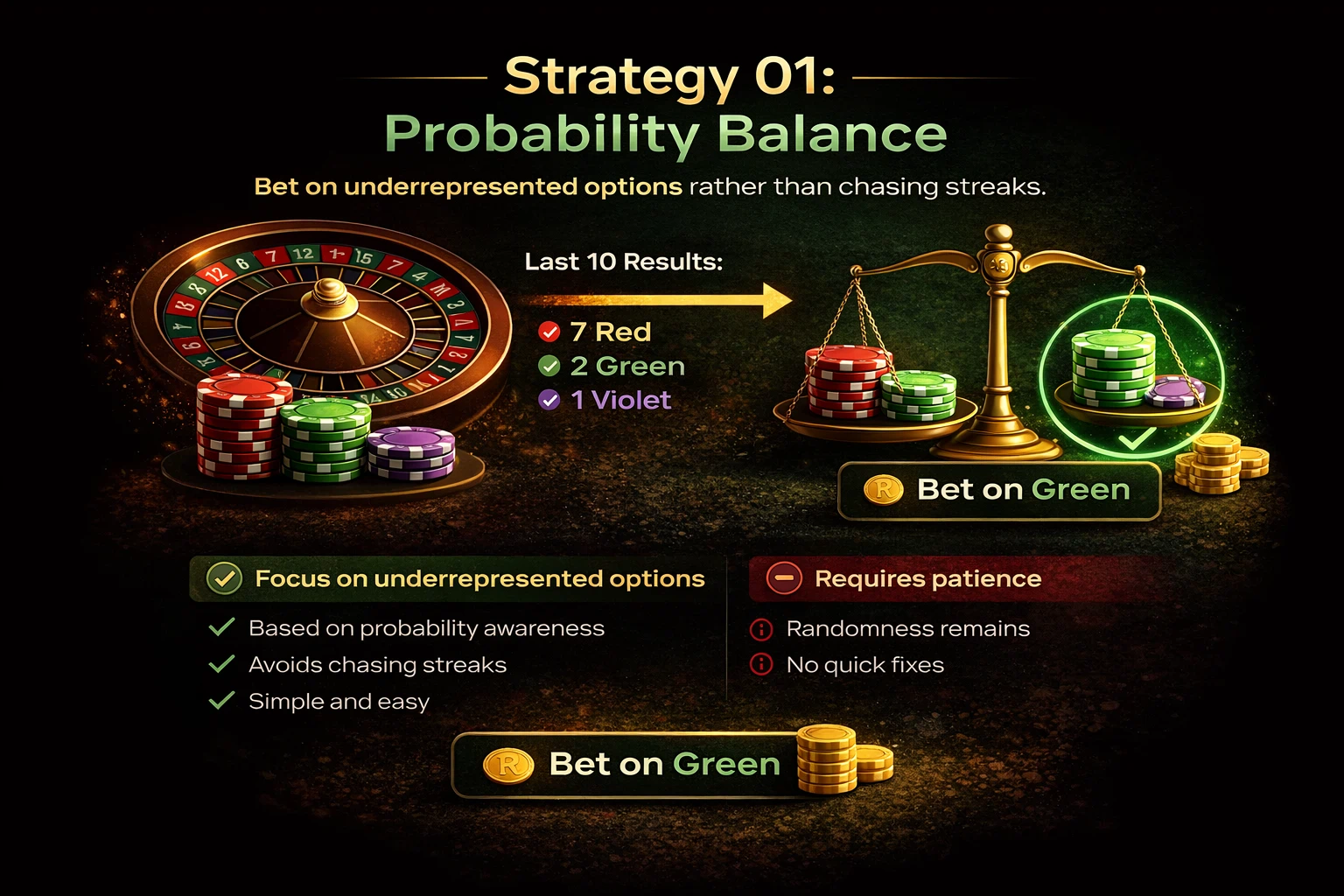
Strategy 01: Probability Balance
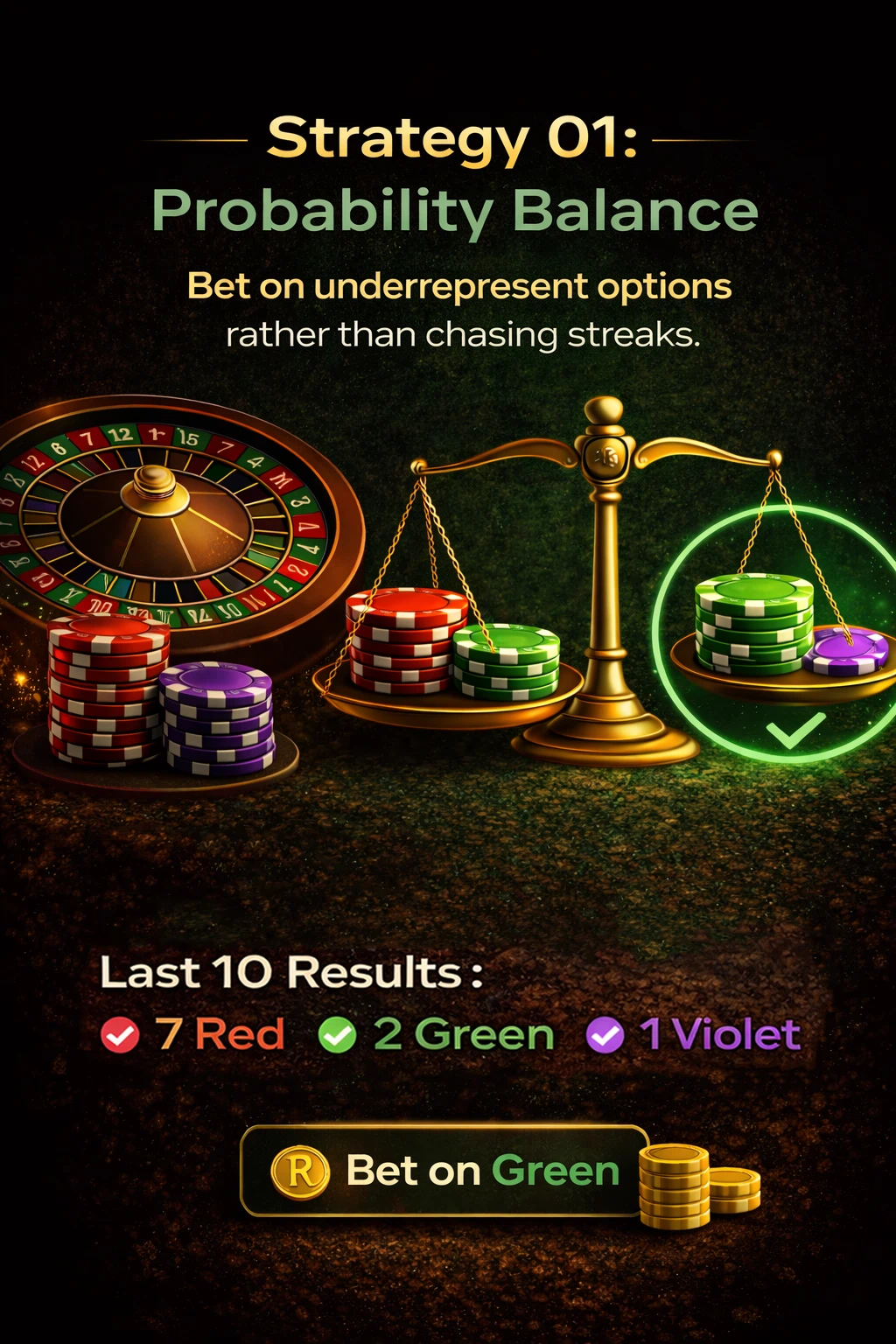
The Probability Balance strategy is based on observing result distribution rather than chasing short-term streaks. Instead of following repeated outcomes, players consider how often each option has appeared and look for selections that seem underrepresented over recent rounds.
This approach assumes that results tend to move around an expected distribution over time, rather than continuing in one direction indefinitely.
This approach assumes that results tend to move around an expected distribution over time, rather than continuing in one direction indefinitely.
When to use this strategy ?
This strategy is commonly used when recent results start to feel clearly one-sided rather than random.
In actual play, players often pause for a few rounds, watch how the distribution builds up, and only place a bet when the imbalance becomes noticeable instead of reacting immediately to every result.
In actual play, players often pause for a few rounds, watch how the distribution builds up, and only place a bet when the imbalance becomes noticeable instead of reacting immediately to every result.
Example
Advantages
Disadvantages
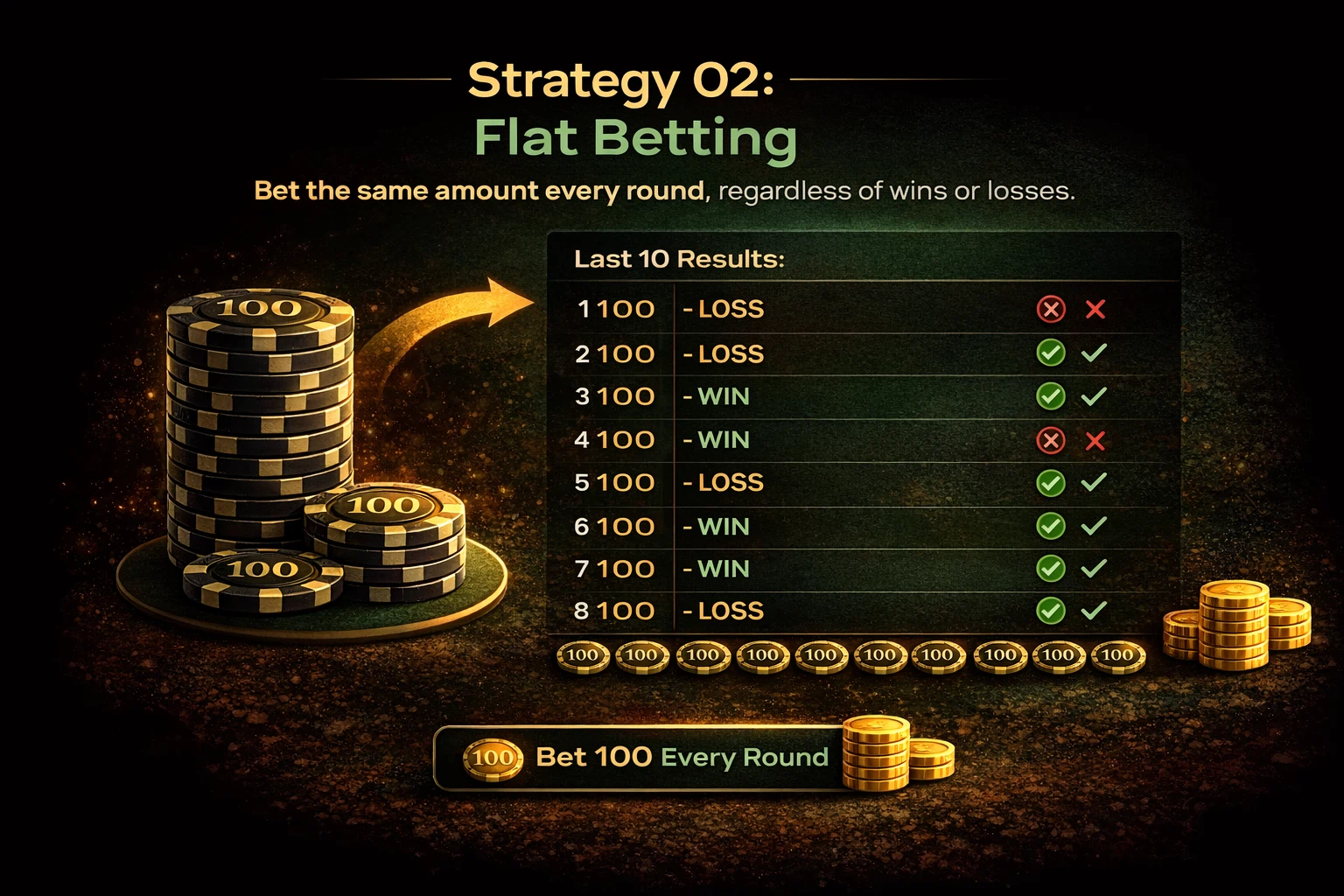
Strategy 02: Flat Betting

Flat Betting means using the same bet amount for every round, regardless of winning or losing.
Instead of adjusting bet size based on results, players focus on keeping decisions simple and consistent.
Instead of adjusting bet size based on results, players focus on keeping decisions simple and consistent.
When to use this strategy ?
This strategy is often used when players want a calm and controlled session without constantly adjusting bet sizes.
In actual play, it feels steady and predictable, allowing players to focus on observing the game flow rather than reacting emotionally to each result.
In actual play, it feels steady and predictable, allowing players to focus on observing the game flow rather than reacting emotionally to each result.
Example
Advantages
Disadvantages
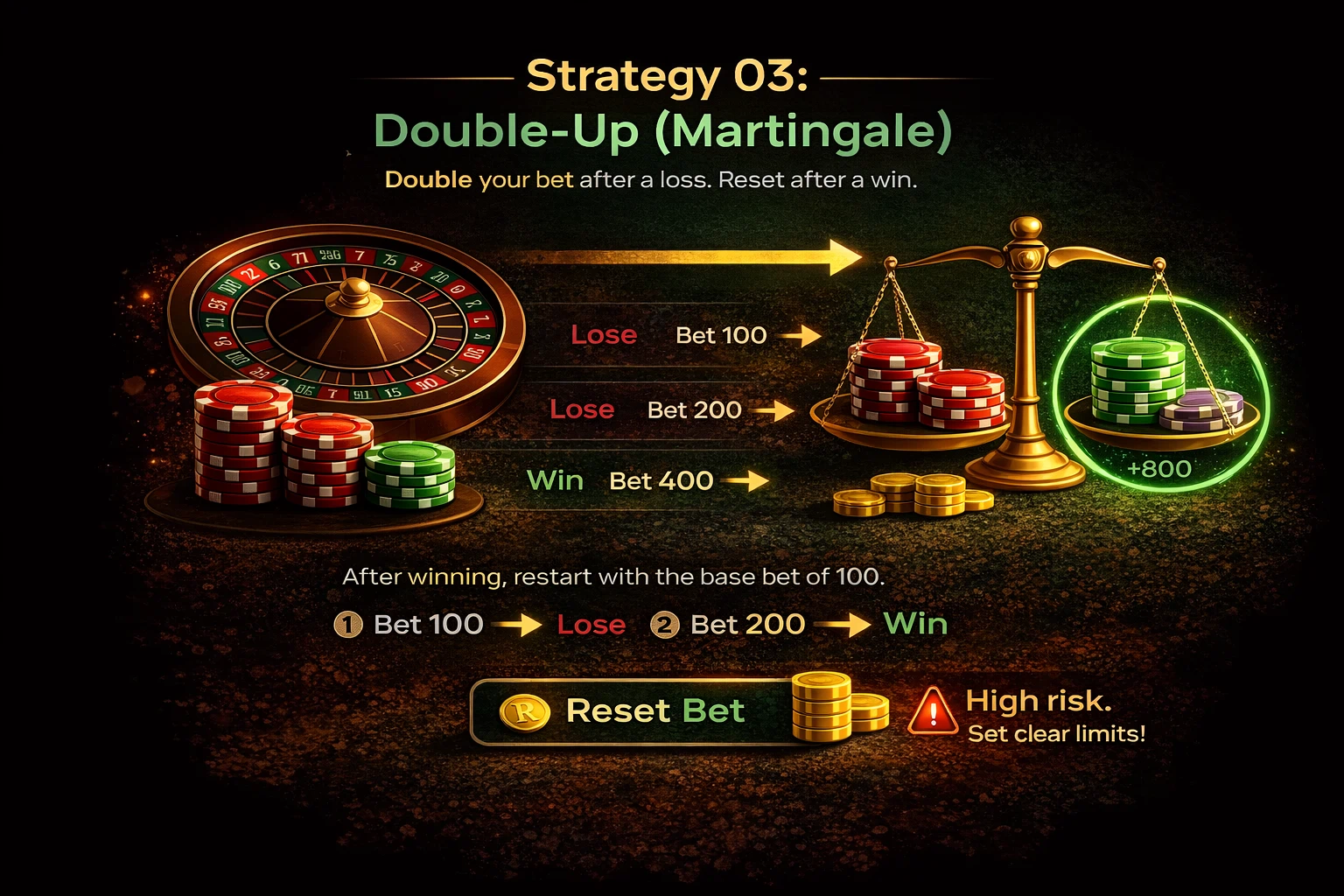
Strategy 03: Double-Up (Martingale)
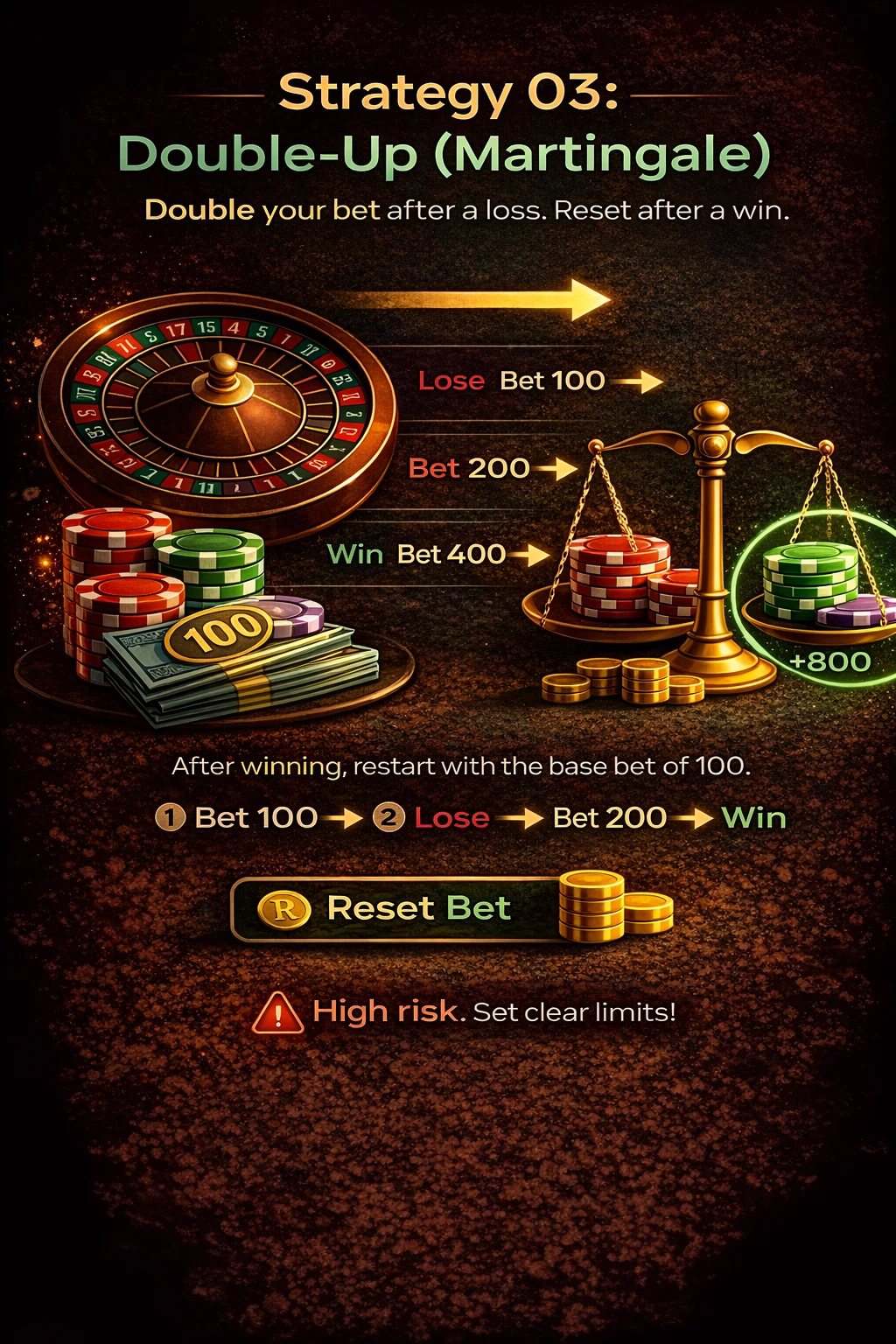
The Double-Up strategy means increasing your next bet after a loss, usually by a fixed multiple such as 2x.
This strategy focuses on bet size adjustment, not on predicting results.
This strategy focuses on bet size adjustment, not on predicting results.
When to use this strategy ?
This strategy is typically used during short sessions when players are fully focused and closely monitoring each round.
In real play, it feels more intense, as bet sizes grow quickly after losses, so players often use it only for limited rounds and stop immediately once their preset limit is reached.
In real play, it feels more intense, as bet sizes grow quickly after losses, so players often use it only for limited rounds and stop immediately once their preset limit is reached.
Example
*This strategy does not change the odds of the game. It relies on disciplined execution, predefined limits, and knowing when to stop.*
Advantages
Disadvantages
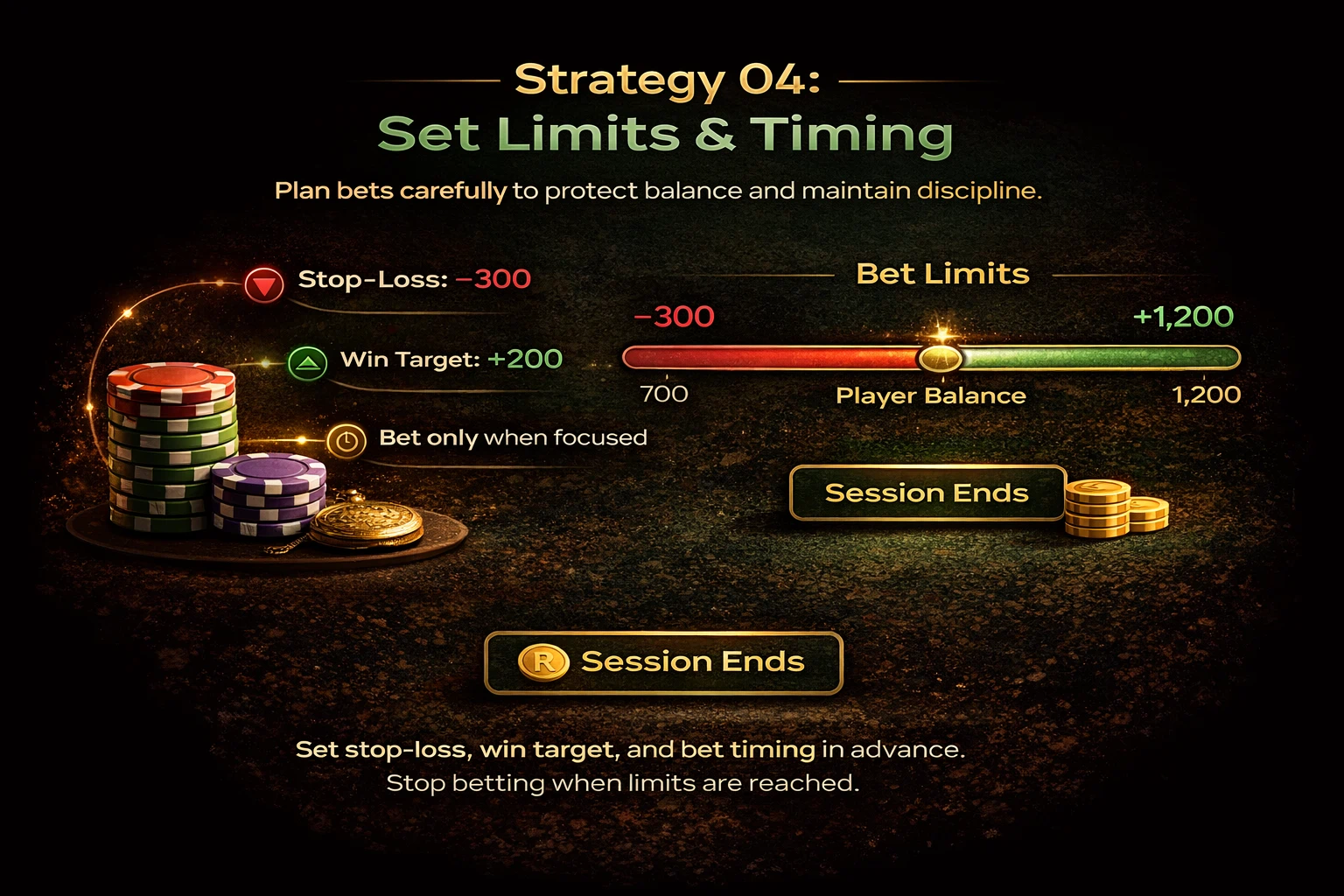
Strategy 04: Set Limits
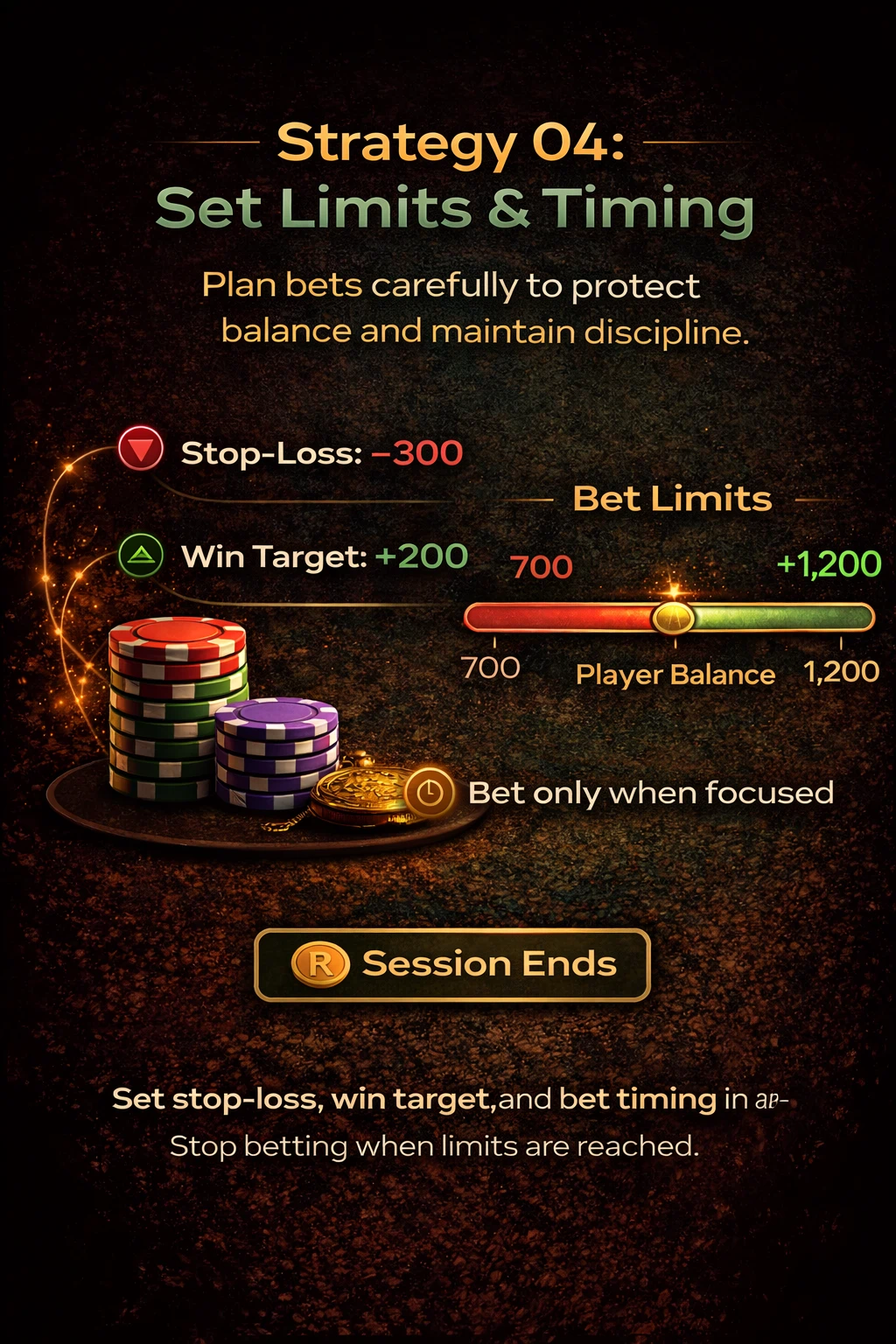
The Set Limits & Timing strategy focuses on planning before playing.
Instead of betting continuously, players decide their budget, stop-loss, win target, and entry timing in advance, then only place bets when conditions feel right.
This strategy is about control and discipline, not prediction.
Instead of betting continuously, players decide their budget, stop-loss, win target, and entry timing in advance, then only place bets when conditions feel right.
This strategy is about control and discipline, not prediction.
When to use this strategy ?
This strategy is often used when players want to stay calm and in control rather than feeling rushed by every round.
In actual play, it feels slower and more deliberate, with players skipping many rounds and only entering when their planned conditions are met.
In actual play, it feels slower and more deliberate, with players skipping many rounds and only entering when their planned conditions are met.
Example
*This strategy does not aim to maximize short-term wins.
Its goal is to maintain control, reduce impulsive decisions, and create a more sustainable playing rhythm.*
Advantages
Disadvantages
Strategies are not rules written in stone. There is no single best way to play — finding a strategy that fits your mindset and discipline matters more than copying others.

Ananya Rao
Founder of colortrading.games
Ready to play ? Register now