If you search “Colour Trading” online in India today, it does not take long to see why so many people are suspicious.
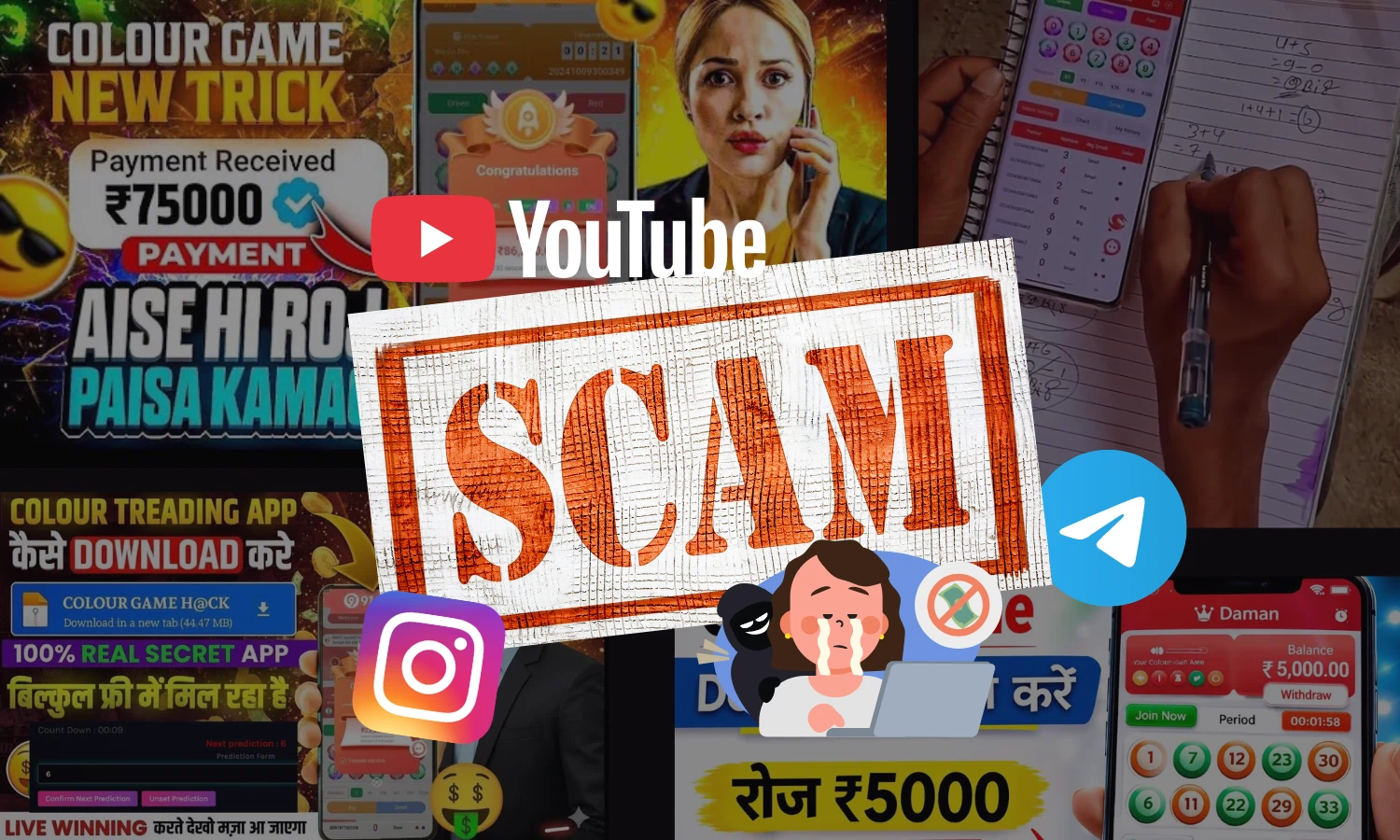
You will find flashy apps with unfamiliar names. You will see Telegram groups promising daily “sure win” signals. You will come across YouTube videos showing people making huge profits in just a few minutes. On the surface, it all looks exciting. But once you look a little closer, the pattern becomes obvious: much of this ecosystem is built to create trust quickly, collect deposits, and disappear when users try to cash out. That is the real problem. It is also the reason so many people now ask the same question:
” Is Colour Trading a scam? “
From what I have seen, the honest answer is this:
The game concept itself is not the scam.
The scam is how many fake platforms package, promote, and operate it.
That distinction matters, because a lot of users are not losing money because they misunderstood the game. They are losing money because they were pushed onto platforms that were never designed to treat players fairly in the first place.
Read More: How to Start Color Trading Safely
Why So Many People Think It’s a Scam
The reputation of Colour Trading did not get damaged by accident. It got damaged because too many users had the same experience.
They saw a video of someone winning easily. They joined through a Telegram link or downloaded an APK directly from a website. They deposited a small amount first, sometimes even won a little in the beginning, and felt the platform might be real. But when they tried to withdraw a larger amount, the problems started.
The excuses are almost always similar:
- “Your verification is still pending”
- “Bonus rollover requirement is not complete”
- “Suspicious activity detected”
- “Please deposit again to unlock withdrawal”
- Or simply no reply at all from support
This is exactly why many players do not trust Colour Trading anymore. From the user’s point of view, it looks like a scam because the platform behaves like one.
And honestly, in many cases, that is exactly what it is.
The Real Warning Sign: How These Apps Are Distributed
One of the clearest warning signs is how many of these platforms are distributed.
Real digital products that want long-term trust usually do not need to hide. But scam-style Colour Trading platforms often avoid proper app marketplaces entirely. Instead, they rely on direct APK downloads shared through shady websites, Telegram channels, WhatsApp groups, and agent networks.
That matters because once an app is distributed this way, the operator controls everything:
- the branding
- the login flow
- the bonus language
- the withdrawal rules
- and sometimes even the game behaviour itself
To ordinary users, it all looks polished enough to feel real. That is what makes it dangerous. The point is not to look obviously fake. The point is to look trustworthy just long enough for you to deposit.
What I Found Behind the Scenes
The most disturbing part is that these operations are not random. They are often structured.
When looking into how these fake Colour Trading platforms are built and sold, one thing becomes clear: there is an entire supply chain behind them. On underground forums and grey-market communities, sellers openly advertise ready-made casino platform packages. These packages often include cloned versions of popular games, including Colour Trading, Aviator, and other fast-result titles. Buyers are offered a white-label setup where they can choose a new brand name, change the logo, change the colours, and launch what looks like a new gaming platform within a short time.
What makes this especially dangerous is not just the cloning. It is the control.
These platform packages are often sold with back-end settings that let operators change payout behaviour, adjust return levels, and create “demo” environments that produce unusually strong win rates for promotional use. That means the winning videos users see online are not always examples of real player outcomes. In many cases, they are sales tools.
So when someone says, “I saw proof on YouTube,” that proof may have been manufactured from the start.
The Agent System Is a Big Part of the Scam
Another reason these fake apps spread so fast is the agent structure behind them.
These platforms do not just advertise directly. They recruit layers of promoters. A top-level agent is promised a percentage of deposits from the users they bring in. That agent then recruits more sub-agents, who recruit even more people below them. The entire model spreads through commission promises.
This is why the same style of content appears everywhere:
- YouTube clips showing easy wins
- Instagram reels with cash-out screenshots
- Telegram messages claiming “today’s fixed signal”
- WhatsApp invitations to join “private winning groups”
It looks like organic hype, but in reality it is often coordinated promotion. The people pushing the app are financially rewarded when new users deposit. Their job is not to teach responsible play. Their job is to make the app look profitable.
And the worst part is that even many of these agents eventually get used too. They bring users, create content, push deposits, and then later complain they were never paid their commissions either. So the scam does not only hurt players. It often burns the promoters at the bottom as well.
Why the “Winning Videos” Fool So Many People
A lot of users still get trapped by the same emotional trigger: visible proof.
If you are someone looking for extra income, and you see video after video of people winning ₹10,000, ₹20,000, or ₹50,000 in a short time, it becomes easy to believe the opportunity is real. Especially when the videos look casual, local, and personal. It feels less like an ad and more like someone sharing a working method.
But that is exactly why these videos work.
The strongest scam content is never the most professional-looking content. It is the content that feels real enough to lower your guard.
Once that happens, the rest is simple:
you test with a small deposit,
you win a little,
you trust the system,
you increase your deposit,
and only then do you find out the withdrawal process was never really on your side.
So, Is Colour Trading a Scam?
If by “Colour Trading” you mean the flood of random APK apps, signal groups, fake winning videos, and unverified platforms being pushed across Telegram and YouTube, then yes, a large part of that world operates exactly like a scam.
But if you mean the game format itself, then that is a different question.
The bigger truth is this:
Colour Trading is not automatically a scam.
But many of the platforms using that name are built around scam behaviour.
That is the warning users need to understand.
The risk is not just losing a round.
The risk is joining a system where the rules, the promotion, and the cash-out process were designed to mislead you from the beginning.
What Users Should Learn From This
The lesson here is not “trust everything” and it is also not “everything is fake.”
The real lesson is to stop judging these platforms by their marketing and start judging them by their structure.
If a platform depends on APK-only distribution, agent referrals, guaranteed-win messaging, fake urgency, vague withdrawal rules, and endless winning videos, that is not a good sign. That is usually the pattern of something built to attract deposits, not to build trust.
Users should be careful, test slowly, and avoid any platform that tries to rush them into payment before they even understand how the system works.
Because in this market, the most expensive mistake is not losing one bet.
It is believing a dishonest platform is legitimate just because it looked popular online.