Your First Colour Trading Session: What to Expect Before You Start
Your first Colour Trading session will be faster, more disorienting, and over sooner than you expect. The rounds move quickly, the betting window opens and closes in seconds, and the results appear before you’ve fully processed the last one. None of this means the game is difficult — it means there’s a difference between understanding the rules and actually playing them. This guide closes that gap.
Why Knowing What to Expect Matters
Most new players either rush in without preparation and lose money figuring out mechanics in real time, or they over-research strategy before they’ve played a single round.
Neither approach is ideal. You don’t need a strategy for your first session — you need to understand the rhythm of the game, how results are displayed, and what a normal session looks like from start to finish. That’s what this article is for.
If you haven’t read how to play colour trading yet, start there. This article builds on that foundation.
Before You Open the Game
Set a session budget. Decide the maximum you’re willing to spend in this session before you open the game. Your first session is for learning, not earning. A small, fixed amount — something you’re genuinely comfortable losing — removes the pressure of tracking whether you’re “up” or “down” and lets you focus on understanding the game.
Decide your bet size. Your per-round bet should be a fraction of your total budget — small enough that you can absorb ten consecutive losses without feeling the need to stop or increase. For most beginners, this means starting at the platform minimum.
Check the platform. If this is your first time on the platform, verify it before depositing. How to identify a fake colour trading platform outlines exactly what to look for. A WHOIS check and a search for withdrawal experiences in independent communities takes five minutes and could save you considerably more.
The First Round: A Walkthrough
Here’s what happens from the moment you open the game:
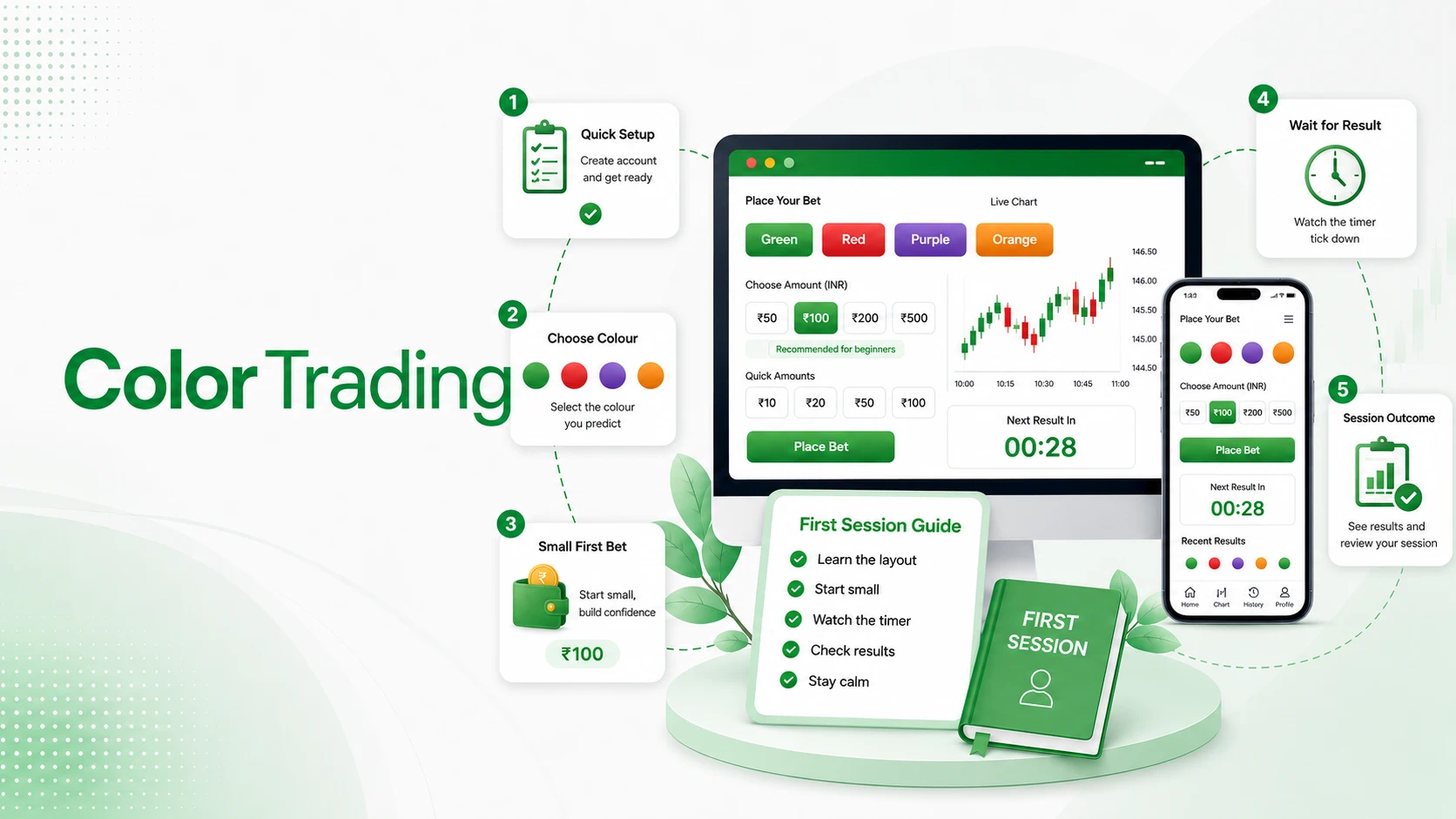
1. You see the countdown timer. This is the remaining time to place your bet. The betting window is open for most of the round, then locks a few seconds before the result appears.
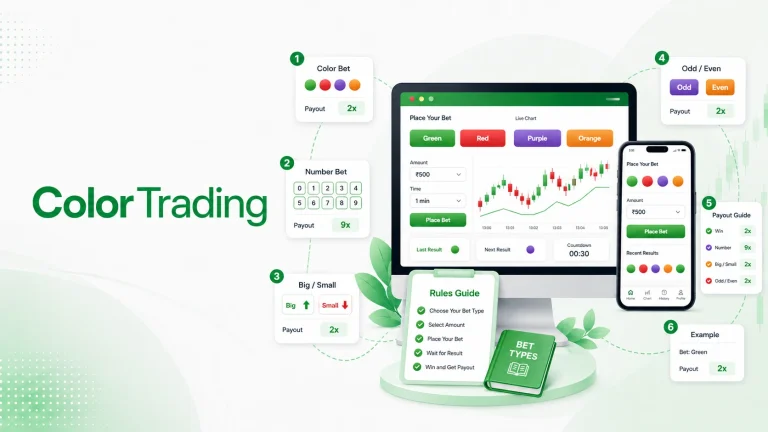
2. You choose your bet type. For a first round, pick something simple: Red or Green (2x payout, covers four numbers each), or Big/Small (2x payout, covers five numbers each). Don’t start with Violet or number bets — save those for when the basics feel automatic.
3. You enter your amount and confirm. Don’t wait until the last second. The lock period catches many first-time players — their bet doesn’t register because they clicked too late.
4. The result appears. A number from 0 to 9 is displayed, along with its colour. Your balance updates immediately.
5. The next round starts. It begins almost immediately. This is where the pace of the game becomes clear — sessions move fast.
What You’ll Notice in the First 10 Rounds
The timer is shorter than it feels. Sixty seconds passes quickly when you’re deciding a bet, confirming it, watching the result, and preparing for the next one. After a few rounds, this becomes automatic.
The result history panel fills up. You’ll see the last 20–30 results displayed. Most new players immediately start looking for patterns. This is natural — and counterproductive. Colour trading rules explained covers this directly: every round is independently generated. The history tells you what happened; it tells you nothing about what will happen next.
You’ll probably win some and lose some. A series of early wins doesn’t mean you’ve found a pattern. A series of early losses doesn’t mean the game is rigged. Short-run variance is normal in any game of chance, and ten rounds isn’t a meaningful sample.
The Moment Most Beginners Go Wrong
It happens between round 5 and round 15.
You’ve lost a few rounds in a row. The natural response is to increase the next bet — either to “recover” the loss faster or because you feel a win is overdue. This is the single most common reason first sessions end badly.
Increasing your bet after a loss doesn’t change your odds on the next round. Every round is independent. What it does is compress your remaining session into fewer rounds, removing the opportunity to settle into the game’s rhythm and make deliberate decisions.
Keep your bet amount fixed throughout the session, regardless of the results. If you’ve lost your budget, the session ends. If you haven’t, keep playing at the same level.
What a Good First Session Looks Like
A good first session isn’t one where you finish ahead. It’s one where:
- You made deliberate, consistent bets throughout
- You stayed within your pre-set budget
- You didn’t change your bet size in response to individual results
- You understood why you won or lost each round (what you bet, what the result was, how the payout worked)
- You finished feeling like you understand the game better than when you started
Win or lose, these are the outcomes that actually matter in a first session. The money you spent is tuition. The habits you form carry forward into every session after this one.
After the Session
Check your results. Not to look for patterns — to review your own behaviour. Did you keep bets consistent? Did you stick to your budget? Did you understand every result that came up?
If you’re uncertain about any of the mechanics you encountered — how Violet rounds worked, what happened when you bet Red on a 0, why your payout wasn’t what you expected — look them up before your next session. The colour trading rules breakdown covers all the edge cases.
Then, if you want to play again, set a fresh budget and start with the same approach.
Try It Risk-Free First
If you haven’t played a single round yet, the platform’s demo mode is the fastest way to get comfortable with the mechanics before real money is involved. Same game, same timer, same results — no financial stakes.
Run 15 demo rounds. Pay attention to the lock timing, the result display, and how payouts are calculated. Then move to real bets with a small budget.
That’s the fastest path from zero experience to informed player.
Disclaimer: Colour Trading is a game of chance. The outcomes described in this article are based on general game mechanics — no outcome is guaranteed. Play responsibly and within your limits.
Frequently Asked Questions
How long should my first Colour Trading session be?
There’s no fixed rule, but 20–30 rounds is a reasonable first session. It’s enough to get comfortable with the timing and observe a range of results without running through a large budget. Stop when you’ve reached your pre-set loss limit, even if you haven’t played 20 rounds.
What’s the biggest mistake in a first session?
Increasing your bet size after a loss. It doesn’t improve your odds and compresses your remaining session into fewer rounds, removing the learning opportunity that the session is meant to provide.
Should I try different bet types in my first session?
Stick to one or two simple bet types — Red/Green or Big/Small — for your first session. Once you’re comfortable with the pace of the game and how payouts are calculated, you can experiment with Violet or number bets.
Is it normal to feel confused in the first few rounds?
Yes. Reading about the game and playing it live are different experiences. The first five rounds are usually disorienting regardless of preparation. It normalises quickly — by round 10, the flow of the game typically feels familiar.