How Much Should a Beginner Bet in Colour Trading? A Practical Starting Guide
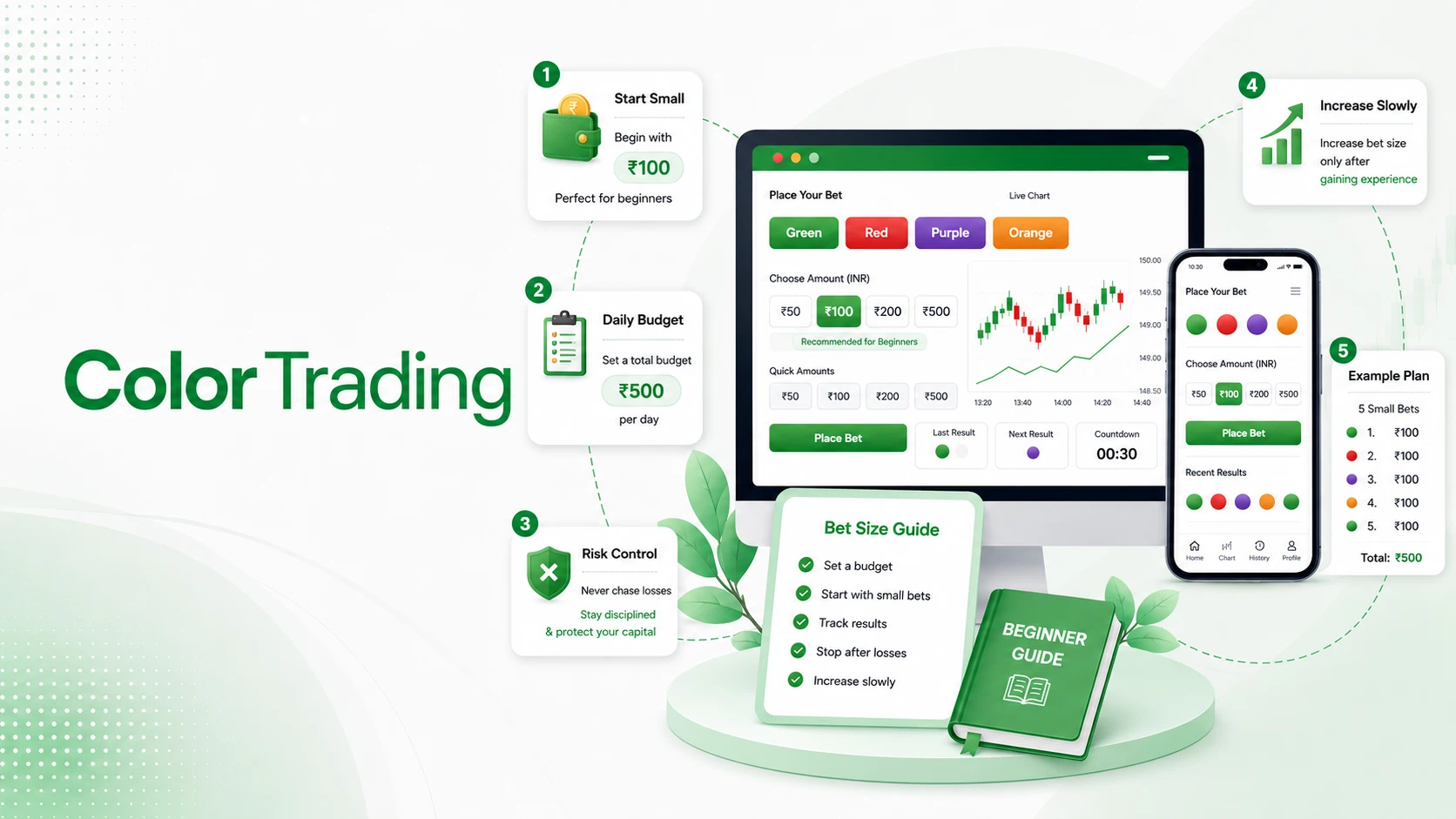
For a beginner, a reasonable starting bet is 1–2% of your total session budget per round. If you’re playing with ₹500, that means ₹5–₹10 per round. This keeps you in the game long enough to understand how it works without a single bad streak ending your session in ten rounds.
Why Bet Sizing Is the First Decision That Matters
Most beginners focus on which colour to pick. The question that actually determines how your session goes is how much to bet.
Pick the wrong colour and you lose one round. Pick the wrong bet size and you lose the session.
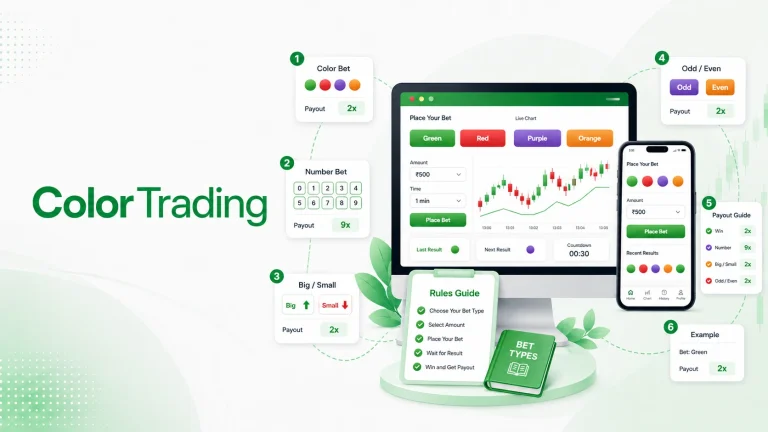
The mechanics of how colour trading works are straightforward once you’ve learned them. Bet sizing requires no special knowledge — just a clear framework before you start. This article gives you that framework.
The Core Principle: Your Budget Is Your Session Length
Think of your session budget as a fixed number of rounds, not a fixed amount of money.
If you enter a session with ₹500 and bet ₹100 per round, you have at most 5 rounds before you’re out. That’s not enough to learn anything, and it means a single short losing streak ends your session before it’s started.
If you enter the same session betting ₹10 per round, you have at least 50 rounds. That’s enough to experience the rhythm of the game, understand how different bet types perform, and make deliberate decisions rather than reactive ones.
The goal for a first session isn’t to win big. It’s to stay in the game long enough to understand it.
A Practical Bet Sizing Framework for Beginners
| Session Budget | Recommended Per-Round Bet | Estimated Rounds |
|---|---|---|
| ₹200 | ₹4–₹5 | 40–50 rounds |
| ₹500 | ₹10 | 50 rounds |
| ₹1,000 | ₹15–₹20 | 50–65 rounds |
| ₹2,000 | ₹30–₹40 | 50–65 rounds |
The target is always 40–60 rounds minimum. That’s enough for a meaningful session. It’s also enough to absorb the kind of losing streaks that occur naturally in a game of chance — and losing streaks will happen.
What Happens If You Bet Too Much
You run out of rounds before you learn anything. A beginner betting ₹200 per round with a ₹1,000 budget has five rounds before the money is gone. Five rounds is not a session — it’s a sample.
You start making reactive decisions. When each round costs a significant amount relative to your budget, the pressure to “win it back” after a loss becomes harder to resist. That pressure is exactly what causes escalating bets and fast losses.
Short-run variance looks catastrophic. In 10 rounds of a fair coin flip, getting 7 tails is entirely normal. In 50 rounds, variance smooths out. If your budget only covers 10 rounds, normal variance feels like a disaster.
What Happens If You Bet Too Little
Nothing goes wrong, with one caveat: wins feel meaningless, which creates its own pressure to increase bets mid-session. If a ₹2 win on a 2x payout doesn’t feel like anything, you’ll start betting ₹20 without realising you’ve changed your approach.
Decide your per-round bet before you start and write it down. The number should feel slightly uncomfortable to lose per round — not painful, but not trivially small.
The Loss Limit: Your Session’s Emergency Brake
Bet sizing controls how fast you go through your budget. A loss limit controls when you stop entirely.
Set it before you start. A common approach for beginners:
- Loss limit: Stop when you’ve spent your full session budget
- Win target: Stop when you’re 30–40% ahead of your starting amount
The win target matters more than it sounds. Most beginners who hit a positive result keep playing, give it back, and finish down. Deciding in advance to walk away when you’re meaningfully ahead removes that decision from a moment when it’s hardest to make.
The Martingale Question
Every new colour trading player eventually hears about doubling their bet after each loss to “guarantee” a recovery. This is called the Martingale strategy, and it’s worth understanding why it fails for beginners specifically.
The theory: double your bet after each loss. When you eventually win, you recover all previous losses plus a small profit.
The problem: a losing streak of seven rounds requires a bet 64 times your starting amount on round eight. If your starting bet is ₹20, round eight costs ₹1,280. Most session budgets don’t survive this.
More practically: the strategy requires an unlimited budget to work. No one has an unlimited budget. And losing streaks of seven or more rounds happen more often than intuition suggests. Colour trading rules explained covers why each round is independent — there’s no “due” win coming, just random results.
For a beginner, flat betting (same amount every round) is far more appropriate than any escalating system.
Revisiting Your Bet Size as You Gain Experience
The framework above is for a first session. As you get more comfortable with the game, your bet sizing can evolve — not necessarily higher, but more intentional.
Some experienced players maintain small, flat bets and play longer sessions for entertainment value. Others set tighter limits and play shorter sessions. Neither is wrong. What changes over time is the ability to make that decision with full awareness of the tradeoffs, rather than just reacting to results.
For now: start small, stay consistent, and use your first session to learn how the game actually behaves rather than trying to win it.
Disclaimer: Colour Trading is a game of chance. The bet sizing guidance in this article is based on general bankroll management principles, not a guarantee of any specific outcome. Play responsibly and within your means.
Frequently Asked Questions
What’s the minimum bet in Colour Trading?
Minimum bet amounts depend on the platform. Most legitimate platforms allow bets starting from ₹1–₹10. For beginners, starting at the platform minimum is the safest approach — you can always increase once you’re comfortable with the game.
Should I bet the same amount every round?
Yes, for beginners. Flat betting (same amount each round regardless of results) removes reactive decision-making from your session. Changing your bet size in response to wins or losses introduces a layer of complexity that beginners don’t need while they’re still learning the game.
What if I win early — should I bet bigger?
Not in your first session. An early win is one result, not a pattern. Increasing your bet after a win is just as likely to accelerate losses as it is to multiply gains. Stick to your pre-set amount until the session ends.
How do I know when to stop?
Stop when you hit your loss limit (pre-set budget exhausted) or your win target (pre-set profit level reached). Having both numbers decided before you start removes the decision from a moment when it’s hardest to make clearly.